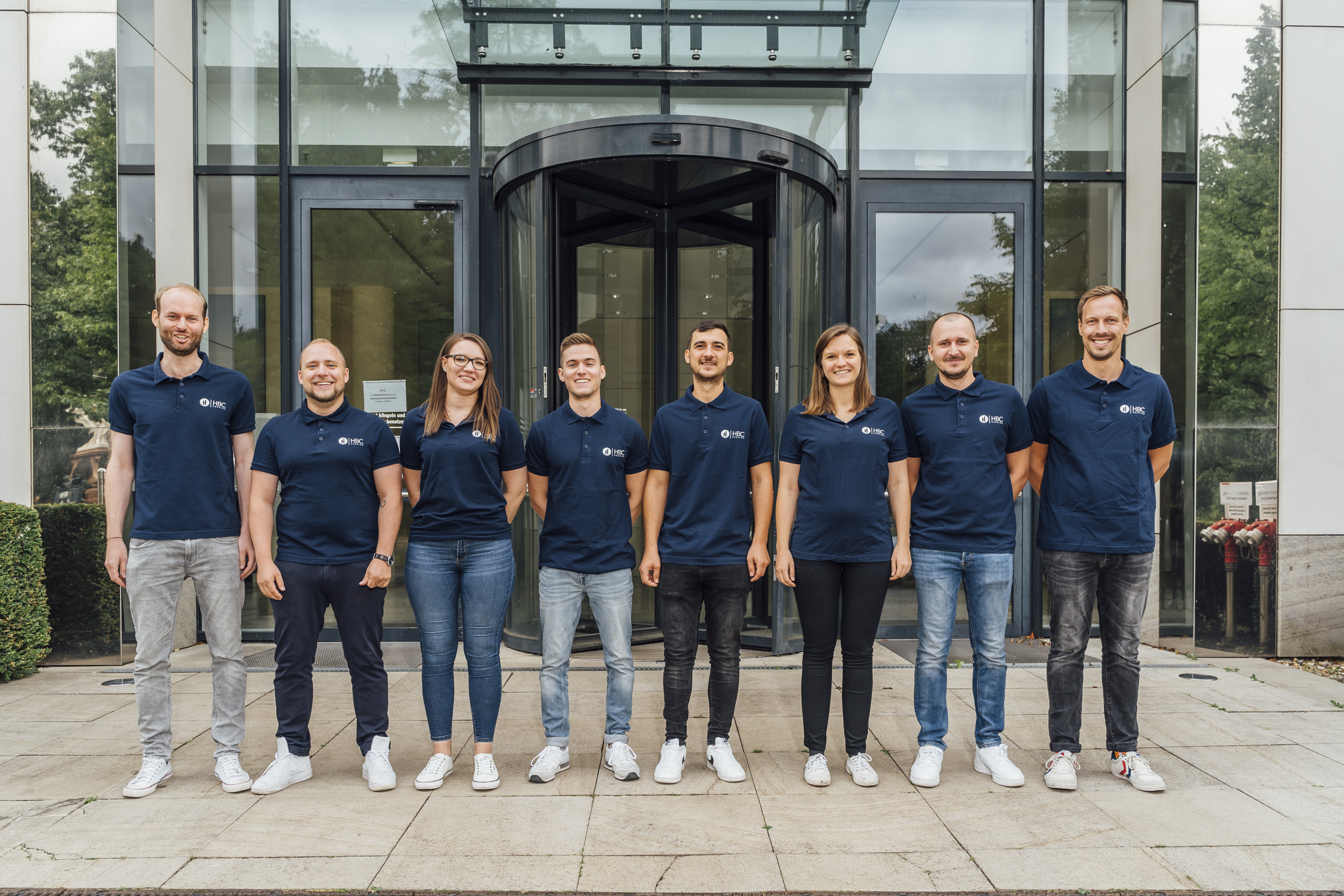

How a positive workplace culture influences ROI
A positive workplace culture is much more than just a pleasant working atmosphere—it is a tangible economic factor. Companies that invest specifically in their culture achieve measurably better business results. The links between employee satisfaction, productivity, and profitability are clearer than is often assumed.
Workplace culture encompasses the shared values, norms, behaviors, and leadership practices within an organization – in other words, everything that shapes daily interactions. It influences how decisions are made, how motivated employees are, and how reliably processes run. Employee engagement – a key indicator of culture – is directly linked to well-being, loyalty, lower absenteeism, and higher productivity [1].
Productivity and commitment
Committed teams work more productively, make fewer mistakes, and are more customer-focused. Organizations with high levels of commitment consistently report better performance—a decline, on the other hand, can be directly measured in terms of productivity losses [1][4]. Companies that are regularly rated as outstanding employers significantly outperform the market in the long term – in some measurements by a factor of 3.5 compared to the S&P average [2].
Staff turnover and its hidden costs
High employee turnover is expensive. The cost of replacing a skilled worker can quickly amount to six to nine months' salary—including recruiting, training, and temporary productivity losses [5]. A corporate culture in which people feel comfortable in the long term significantly reduces these costs. Strong cultures have been shown to be associated with around 40% higher employee retention [3].
Customer satisfaction as a result
The influence of workplace culture does not end at the company's boundaries. Satisfied, engaged employees provide better service – this is reflected in higher customer satisfaction, stronger customer loyalty, and ultimately in increased sales. A better employee experience has a measurable impact on business results [6].
Team cohesion and cooperation
A good culture promotes trust, transparent communication, and knowledge transfer—this reduces friction losses and makes teams more capable of taking action. A sense of belonging and a shared purpose have been proven to strengthen both performance and problem-solving abilities [7].
Absenteeism and mental health
A poor work culture increases stress, sick days, and conflicts. Worldwide, depression and anxiety disorders cost around twelve billion working days and approximately one trillion US dollars in productivity each year [8]. Companies with a health-friendly culture can substantially alleviate this burden—while also keeping ongoing operations more stable.
Innovation and creativity
Innovation happens where people communicate openly, are allowed to make mistakes, and ideas are welcome. Companies with a clear mission and strong culture achieve around 30% more innovation than the average [3][9]. A corporate culture that promotes psychological safety creates the basis for teams to think creatively and respond more quickly to changes in the market.
Challenges in building a culture
Building a strong workplace culture is not a sure-fire success. Inconsistent leadership is one of the most common stumbling blocks—culture is modeled top-down, and a lack of leadership support weakens any initiative [10]. Added to this are resistance to change, short-term productivity pressures that crowd out long-term cultural investments, and the particular challenge of distributed and hybrid teams that require different rituals and tools [12].
Measurement also remains complex: individual indicators such as eNPS alone are not enough [11]. A combination of employee metrics, operational key figures such as turnover and sick leave, and financial metrics such as cost per replacement and sales development is more meaningful.
Technology as a lever
Digital tools—from people analytics to collaboration platforms—can strengthen culture in a targeted manner when they empower people rather than replace them. The key here is to combine technological levers with human-centered processes [6]. Usage rates, time saved, and user satisfaction provide concrete metrics for this.
Conclusion
A positive workplace culture is not a soft nice-to-have—it is a measurable business advantage. It increases productivity and innovation, reduces turnover and absenteeism costs, improves customer outcomes, and makes companies more resilient in the competition for talent. The ROI can be credibly demonstrated with the right metrics—and building it starts with leadership that takes culture seriously as a strategic issue.
—-
Sources
[1] Gallup (2024): Employee Engagement.
https://www.gallup.com/394373/indicator-employee-engagement.aspx
[2] Great Place To Work (2025): Fortune 100 Best Companies to Work For 2025.
https://www.greatplacetowork.com/best-companies-to-work-for
[3] Deloitte (2025): Becoming Irresistible: A New Model for Employee Engagement.
https://www.deloitte.com/us/en/insights/topics/talent/employee-engagement-strategies.html
[4] Gallup (2025): State of the Global Workplace 2025.
https://www.gallup.com/workplace/349484/state-of-the-global-workplace.aspx
[5] SHRM (2024): Improving Employee Retention and Reducing Turnover. https://www.shrm.org/topics-tools/tools/toolkits/managing-employee-retention
[6] Deloitte (2023): Research Shows Workforce Experience Drives Loyalty and Retention.
https://www.deloittedigital.com/us/en/insights/perspective/workforce-experience-by-design.html
[7] Deloitte (2020): Belonging. From Comfort to Connection to Contribution.
https://www.deloitte.com/us/en/insights/topics/talent/human-capital-trends/2020/creating-a-culture-of-belonging.html
[8] World Health Organization (2024): Mental Health at Work.
https://www.who.int/news-room/fact-sheets/detail/mental-health-at-work
[9] Deloitte (2015): Becoming Irresistible: A New Model for Employee Engagement.
https://www.deloitte.com/us/en/insights/topics/talent/employee-engagement-strategies.html
[10] Business Insider (2025): Managers aren’t feeling so hot right now. It’s costing them their sanity and the global economy billions.
https://www.businessinsider.com/manager-engagement-gallup-workplace-report-2025-4
[11] Culture Amp (2017): Understanding the Employee Net Promoter Score (eNPS).
https://www.cultureamp.com/blog/employee-net-promoter-score
[12] Deloitte (2024): 2024 Global Human Capital Trends.
https://image.marketing.deloitte.de/lib/fe31117075640474771d75/m/1/96cf5d94-ee17-40a7-beca-f4e5e8f8ae72.pdf